Reducing Needlestick Injuries in Pediatric Settings

Pediatric care environments are unique, particularly when it comes to the threat of accidental needlesticks. These spaces are often filled with energy and unpredictability, which only heightens the need for enhanced precautions to protect the most vulnerable patients. Pediatric offices often use needles and other sharps, which creates an increased risk that demands focused attention.
In the US, hundreds of thousands of needlestick injuries are reported each year. Although pediatric patients and staff may only make up a small portion of those affected, the results can be far more devastating when they occur.
Children, especially toddlers, are naturally curious. Brightly colored sharps containers placed at eye level, or even within arm’s reach, can inspire curious hands to reach and probe them. When improperly positioned or unsecured, these containers can quickly become a serious hazard.
At the same time, pediatric clinicians work in fast-paced, emotionally charged environments, increasing the risk of accidental sticks, whether to the caregiver, child, or a colleague.
Pediatric sharps safety is paramount to the well-being of any practice, not only because of the most important goal of minimizing injuries, but also to protect trust and create an environment where both patients and healthcare workers feel safe.
This starts with understanding and eliminating preventable risks.
WHAT YOU NEED TO KNOW:
- The Real-World Risk: A Story That Shouldn’t Happen Again
- The Candy Test: A Simple Standard for Pediatric Sharps Safety
- Understanding the Risk of Needlestick Injury in Pediatrics and Beyond
- How Sharpsmart Helps Create a Safer Pediatric Environment
- Supporting Clinicians: Proactive Sharps Safety in Pediatric Care
- Creating a Safer Standard for Pediatric Sharps Safety
The Real-World Risk: A Story That Shouldn’t Happen Again
A single needlestick injury can cost thousands in treatment and follow-up care, but in pediatrics, the real cost includes trauma to the child, fear for their family, and lasting reputational damage to the facility. These are risks no healthcare organization can afford to ignore.
In a case reported to Daniels Health, a three-year-old child reached into an unsecured sharps container to retrieve a dropped item. The container located within easy reach and lacking any access restriction, allowed the child to insert his hand fully. He suffered multiple punctures from contaminated needles.
The medical response was immediate. The child had to undergo extended testing for bloodborne pathogens and his family had to endure weeks of waiting and uncertainty. Staff involved in the incident carried the weight of fear and frustration. The lasting emotional impact and ripple effect of such an incident can’t be overstated.
Unfortunately, stories like this aren’t isolated. In pediatric environments, the combination of curiosity, proximity, and inadequate container design creates a silent but significant risk. It only takes an unattended moment with an unsecured sharps container to lead to a serious pediatric needlestick incident. That’s why passive protection systems are even more critical when it comes to healthcare environments which frequently treat children.
Needlestick incidents often don’t happen because people are careless or negligent. They happen because systems weren’t put into place for the realities of pediatric care.
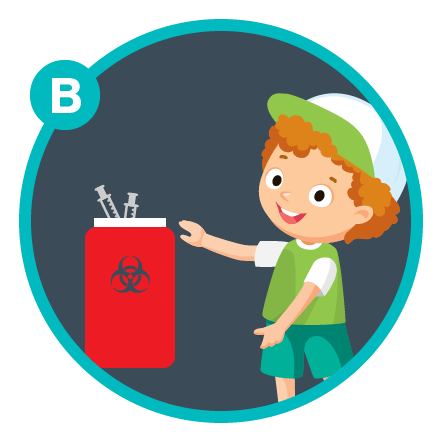
The Candy Test: A Simple Standard for Pediatric Sharps Safety
Sharps safety in pediatric environments will need to extend beyond standard compliance. This means anticipating how children see and interact with their surroundings. One of the simplest ways to evaluate container safety for young patients is through a concept known as the “Candy Test.”
The idea is straightforward: If a piece of candy were dropped into a sharps container, could a child attempt to retrieve it?
If the answer is yes, the container fails the test.
This simple question highlights a serious issue. Open or under-secured sharps containers, especially those placed within reach of children, create real risk. A toddler’s hand can fit into an opening around one and a half inches to two inches in diameter. In pediatric settings, containers are often mounted at lower heights to accommodate staff workflows, but without proper safeguards, that positioning can invite unintended access from children who are naturally curious and unaware of the danger.
The Candy Test is a good starting off point for safety-proofing a healthcare environment. If a small piece of candy can fall into an opening, so can a tiny hand. And if a hand can reach in, sharps exposure is only one step away. That’s why healthcare settings where children can be present (even beyond patients) need to use a sharps disposal system that passes the Candy Test and doesn’t allow little hands the ability to touch what’s inside.
Understanding the Risk of Needlestick Injury in Pediatrics and Beyond
Many traditional sharps containers were designed for general use, not with pediatric environments (or children as a whole) in mind. While these containers may technically meet regulatory standards, many fall short when evaluated against the real-world needs of child safety.
It’s important to note that children don’t just show up in pediatric clinics. Urgent care locations, emergency rooms and general care offices may often see pediatric patients, even if they aren’t specifically designed for pediatric care. And beyond pediatric patients, children may find their way into other offices when parents and caregivers are being treated. A pediatric needlestick injury is still a serious incident whether the child is a patient or a bystander, making this a wider concern in the real world. That’s evident by recent news such as the awarding of over $4 million to a parent of a child who experienced a needlestick injury in a parking lot of a South Carolina Target retail location. The decision was based on a finding that the retailer failed to maintain a safe environment, demonstrating that it’s not just pediatric patients who can seek damages from a needlestick injury.
Open-access designs, horizontal drop openings, and wall mounts placed at waist height may seem convenient, but where children are involved, they create unnecessary risk. Brightly colored containers can draw a child’s attention. Unrestricted openings make it possible for small hands to reach inside. In some cases, overfilled containers increase the chances of sharps protruding or falling out altogether.
Even containers considered “safe” by adult standards may still be dangerous when located near pediatric bedsides, play areas, or family waiting rooms. Pediatric patients don’t always understand danger, and their curiosity can quickly turn an overlooked hazard into a traumatic incident.
How Sharpsmart Helps Create a Safer Pediatric Environment
Designed with both patients and clinicians in mind, the Sharpsmart container system was engineered to reduce needlestick injury risk and improve sharps management in all care settings, including pediatrics. Its design directly addresses the issues that cause most container-related exposures: hand access, overfilling, and incorrect placement.
Sharpsmart is the only reusable sharps container on the market proven to pass the Candy Test, offering safety features that actively prevent access and minimize exposure risk.
Key features include:
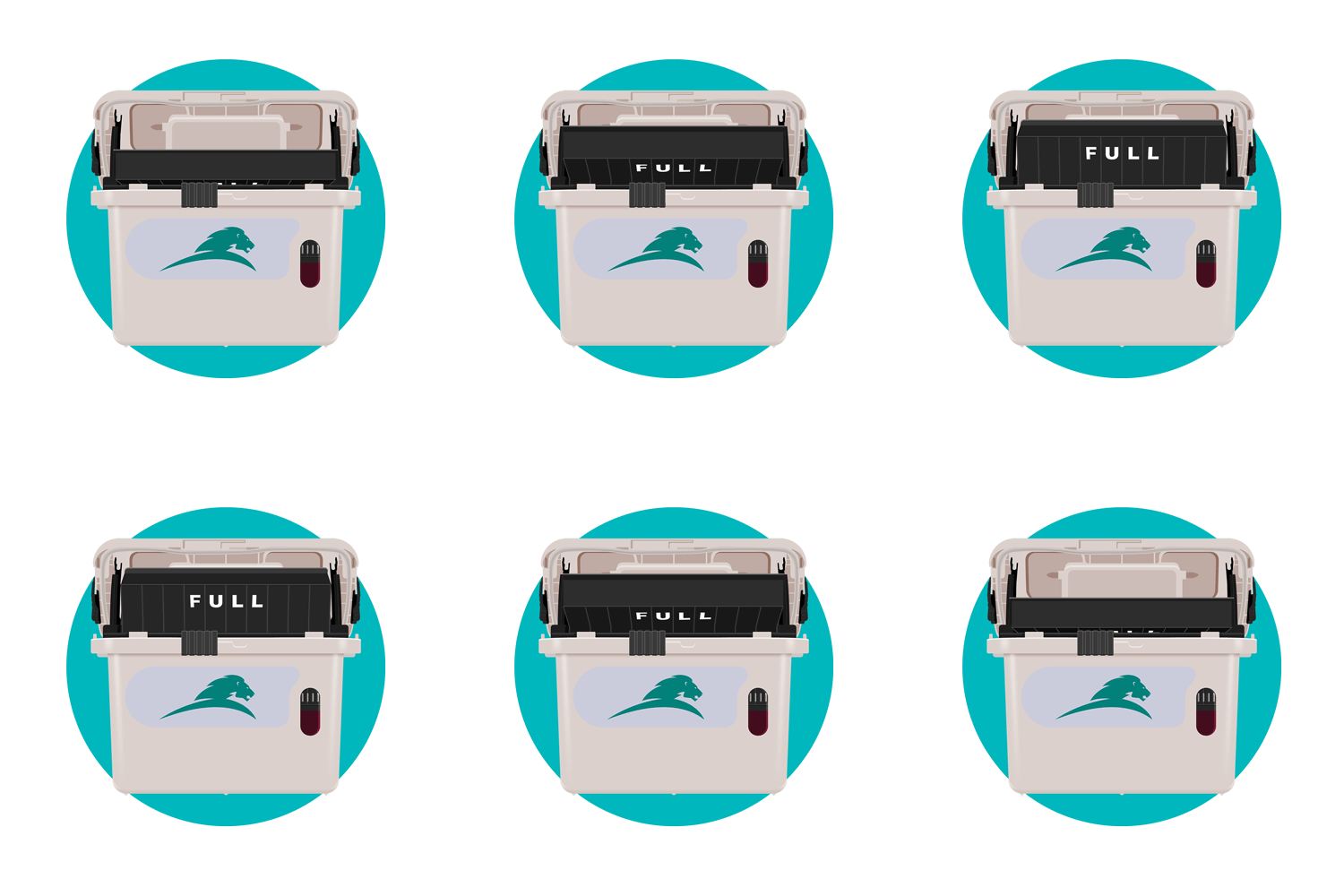
- A gravity-sensitive safety tray that restricts hand access and shields contents from view
- A hands-free disposal system that eliminates manual handling
- Passive overfill protection that prevents sharps from piling above safe fill levels
- Secure, wall-mounted or mobile stands to keep containers out of children’s reach
- A sealed design with no removable parts, plugs, or openings that could be tampered with
These features work together to reduce the likelihood of both clinician and pediatric patient exposure to sharps. This is one of the most significant changes which can build greater confidence in the safety of your care environment.
Supporting Clinicians: Proactive Sharps Safety in Pediatric Care
Caring for children often means navigating unpredictable moments.
As anyone who has worked in pediatrics knows, it’s full of sudden movements during a procedure, high-stress situations, and emotionally reactive environments. These unique variables all combine to increase the risk of needlestick injuries, making sharps safety essential. The good news is such protocols can be practical and convenient when incorporated into the typical workflow of the healthcare environment.
Best practices for clinicians working in pediatric settings include:
-
- Always plan for sharps disposal before beginning any procedure
- Use safety-engineered devices (SEDs) designed to reduce the risk of needlestick injury
- Ensure correct positioning of sharps containers. They should be out of a children’s reach, clearly visible to staff, and securely mounted
- Engage in routine bloodborne pathogen and sharps safety training, especially when procedures or protocols change
- During injections or procedures involving sharps, correct positioning of the child is essential to prevent sudden movement that could result in accidental needlestick injuries, both to the patient and the provider
- Promptly report any needlestick or sharps-related injury for appropriate follow-up and response
- Encourage leadership to perform periodic safety audits, which can help identify overlooked risks and sharps container issues
In these fast-paced environments, proactive planning is the most effective way to reduce needlestick injury risk for both staff and pediatric patients.
Creating a Safer Standard for Pediatric Sharps Safety
Needlestick injuries are always serious, but the stakes are especially high in pediatric care. Exposure in a young patient can be exponentially more traumatic for an entire family, resulting in months of uncertainty, testing and treatment. The lasting distress for families and staff is impossible to fully measure. For the facility, even a single incident can bring direct costs for treatment and testing, as well as indirect costs tied to lost trust, reputational harm, and potential legal exposure.
Thankfully, solutions exist and a proactive, pediatric-specific approach to sharps safety can make a significant impact in decreasing the risks. This approach should account for how children see and interact with their environment and tackle everything from correct container positioning to clinical training and device selection, because every detail matters.
Start with a sharps safety audit. Evaluate whether your containers pass the Candy Test. And if they don’t, Daniels Health can help.
Simple steps can go far in protecting what matters most, because in pediatric care, safety can never be left to chance. Reach out to learn more about Sharpsmart and how Daniels can help your practice maintain a safer environment.

Laura Wakelam
Let's Talk!
Your time is valuable, and we don’t want to play hard to get. You can either phone us directly on the details listed on our contact page, or feel free to fill out this short form and one of our team members will get back to you as quickly as possible.