Color Coding Requirements for Biomedical Waste
TOPICS WE WILL COVER:
Introduction to Color-Coding in Biomedical Waste Management
Questions about color-coding for hazardous waste are among those most frequently asked when it comes to medical waste management. As with most things having to do with healthcare waste management, the topic captures the attention of more than one federal agency: the FMSA, OSHA, and DOT, just to name three.
This article explains various color-coding requirements regarding standard color codes for waste segregation and disposal, while explaining the crucial differences between:
- General Waste
- Hazardous Waste
- Regulated Medical Waste
Disambiguating Terms about Healthcare Waste
It’s important to preface any discussion about hospital waste color-coding by disambiguating terms. People will talk about “hospital waste,” “biohazardous waste,” “biomedical waste,” “clinical waste,” and “medical waste” as if they’re the same things, and they’re definitely not.
What is “Hospital Waste”?
The term “hospital waste” is more accurately called “healthcare waste” because it also emanates from clinics, dental offices, veterinarian practices, funeral parlors, nursing homes and more, not just hospitals.
Over 80 percent of healthcare waste is plain trash in the eyes of the EPA, and can be treated that way. This is a crucial point, as you don’t want to overidentify wastes as hazardous and thereby spuriously inflate your waste-disposal costs.
Defining Hazardous Waste
The nomenclature is also confounded by the term “hazardous waste.” Per the EPA, something is hazardous if it’s “characteristically” ignitable, corrosive, reactive, toxic; or it’s otherwise “listed” for some other danger to people and/or the environment.
The Role of Regulated Medical Waste (RMW)
All that said, if you’re in the medical profession or an allied field (e.g. laboratories, funeral homes, dental practices), you’ll notice that much of the material you need to dispose of, while patently dangerous, probably isn’t ignitable, corrosive, or reactive; and isn’t necessarily toxic.
As a consequence, there’s a subcategory of hazardous waste called “regulated medical waste,” commonly referred to in the literature as RMW, which is a waste-stream that must be kept separate from other hazardous wastes and, of course, your general waste.
Requirements for Color-Coding of General Waste
Per the WHO, approximately 85 percent of healthcare waste is “general waste” that can be processed through regular procedures. More than half of this is paper & cardboard (54%), the remainder being organic (18%), plastic (15%), metal (3%), glass (2%), and unspecified (8%).
Multiplying these proportions across 85 percent, this means half (.459) of everything you need to throw away is benign paper or cardboard; and about 40 percent (.391) of it is organic, plastic, metal, glass, or something else, all of it similarly innocent.
You want none of this general waste in your hazardous or RMW waste-streams, as you’d suffer needless hazardous waste disposal costs. So getting the color-coding correct is integral to containing your waste-management costs.
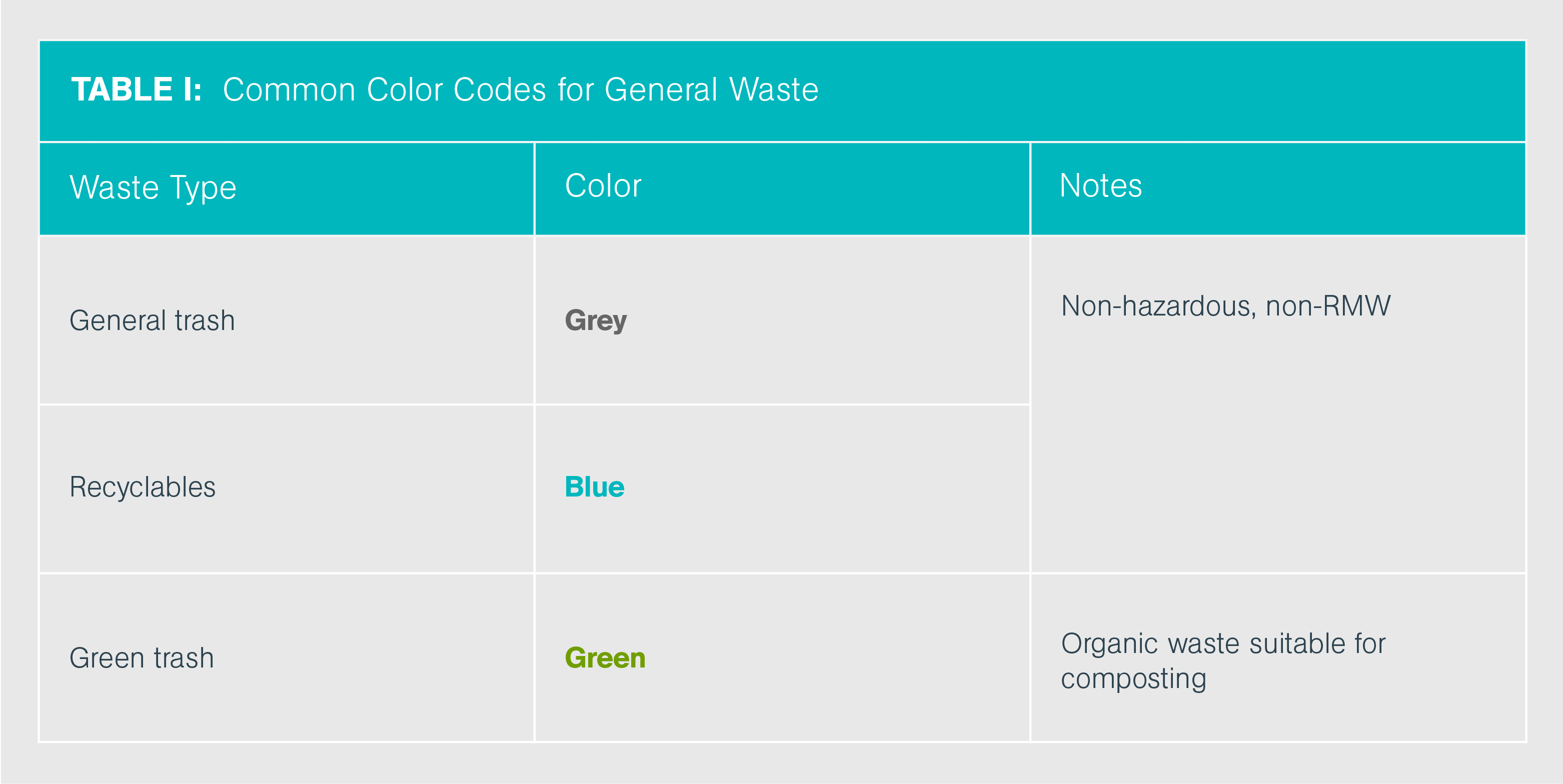
Table I presents the color codes for general waste
Requirements for Color-Coding of Biomedical Waste
Biomedical waste (also known as regulated medical waste, or RMW), is healthcare waste that can be “hazardous” for the characteristics discussed above, but also for instead being infectious, radioactive, or otherwise dangerous (i.e. “general”). More specifically:
- Anything that’s been soaked in blood (gloves, gauze, gowns, etc.)
- Cultures of infectious diseases and/or agents
- Materials from decommissioned medical equipment (e.g. batteries and heavy metals)
- Discarded vaccines, antibiotics, pills, and other pharmaceuticals
- Human or animal tissues
- Waste from the rooms of patients who have communicable diseases
- Disinfectants and solvents used for laboratory purposes
- Anything carcinogenic, teratogenic, or mutagenic
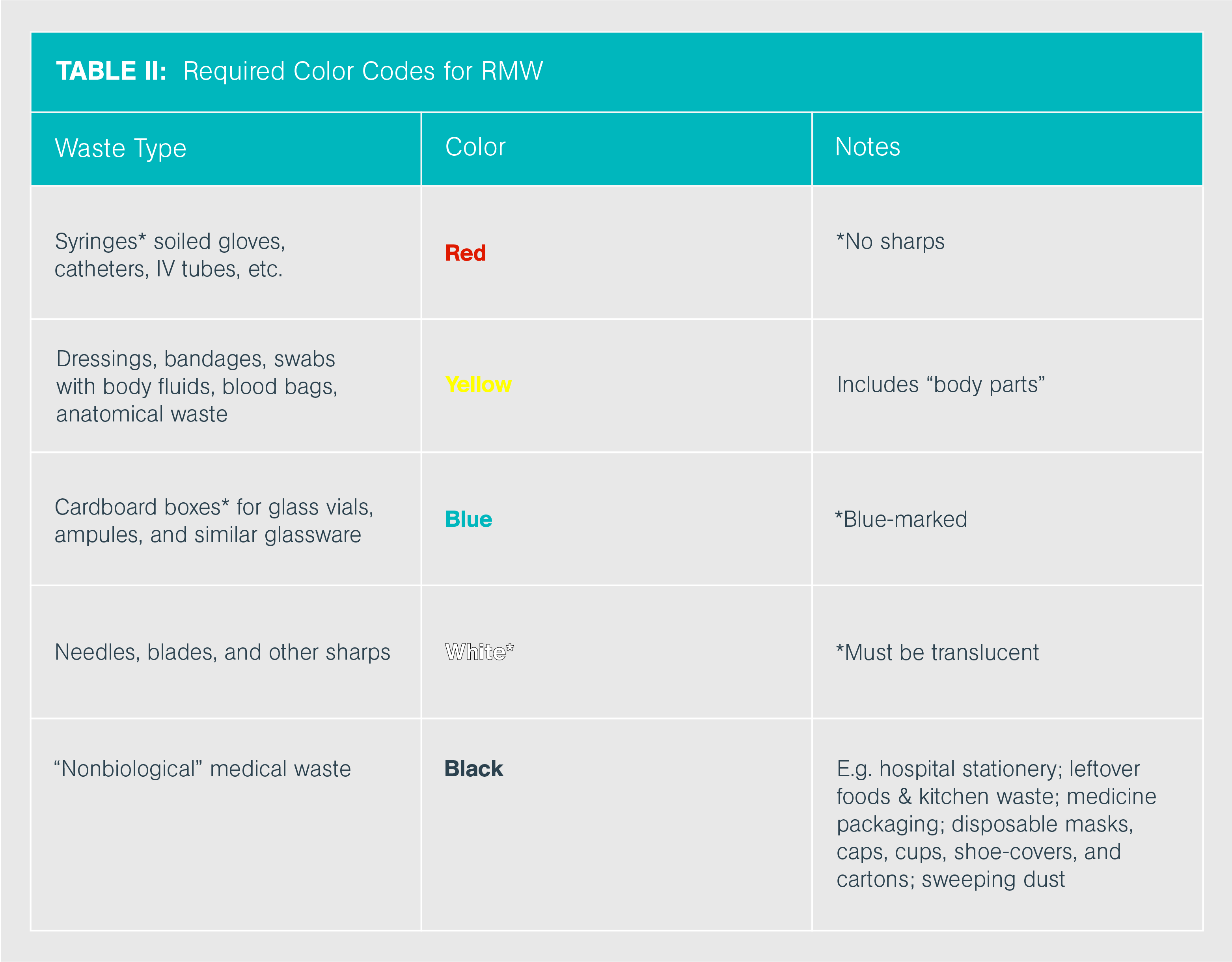
Table II presents the required color codes for RMW
ANSI Color-Coding Requirements and the DOT for Healthcare & RMW Waste
Most color-coding requirements for hazardous waste & chemicals reflect standards developed by the American National Standards Institute (ANSI), a non-profit organization that helps develop voluntary standards for products, services, processes, systems, and personnel.
ANSI color-coding requirements are useful in special situations, especially if you’re involved in the transport of locally-generated hazardous and/or RMW waste to a treatment, storage, or recycling facility.
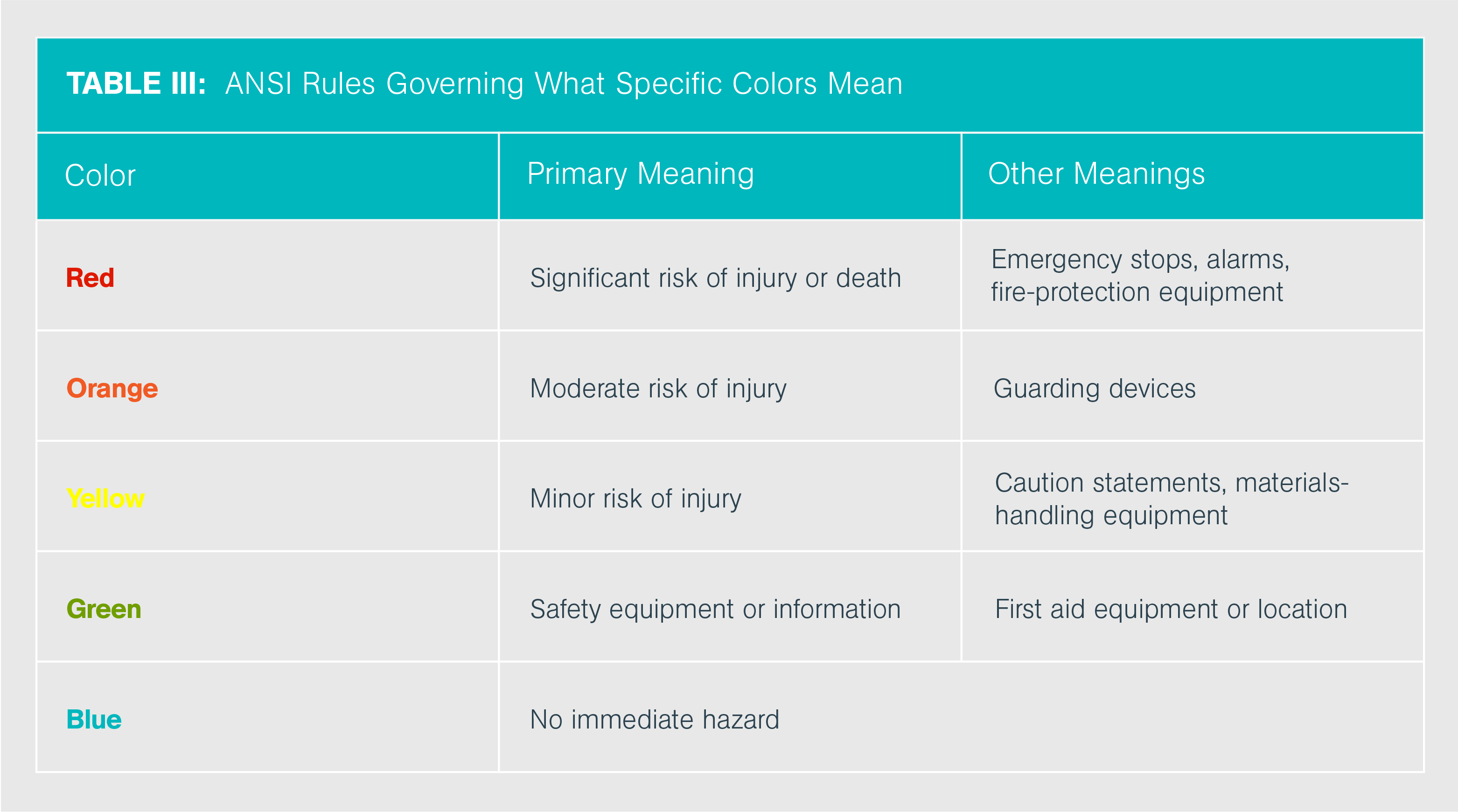
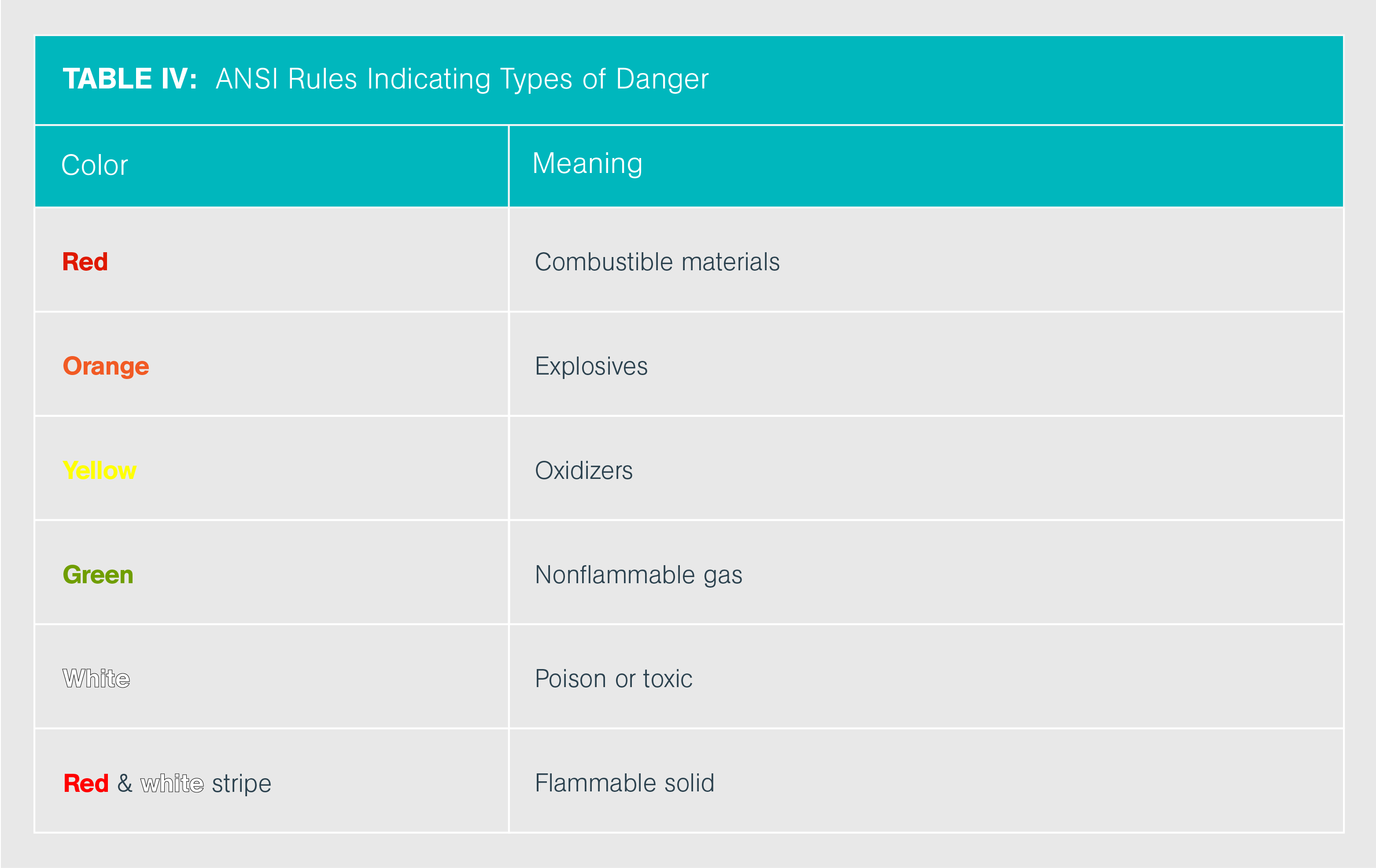
Table III presents ANSI rules governing what specific colors mean vis-à-vis degree of danger. But notice that the same colors have different meanings when used to reference the types of danger (See Table IV).
Table III presents the ANSI Rules and What the Specific Colors Mean
Per the DOT, vehicles and the containers inside them must have placards attached that indicate the hazardous waste that’s being handled & transported. Such placards are always diamond-shaped; and their size must adhere to international standards, measuring at least 4″ x 4″ (100 mm) on each side, square-on-point.
Table IV presents the meanings of the various colors juxtaposed with some placard examples
NFPA Color-Coding Requirements and OSHA for Healthcare & RMW Waste
This NFPA triangle indicates slight health, serious flammability, and minimal reactivity danger. The National Fire Protection Association (NFPA) is another nonprofit organization, this one devoted to “eliminating death, injury, property, and economic loss due to fire, electrical, and related hazards.”
What gives NFPA rules metaphorical “teeth” is that they drive OSHA color-coding rules in your workplace.
The NFPA system is called NFPA 704, and it’s distinguished by a color-coded diamond with four quadrants.
The quadrant color is blue for health hazards, red for flammability, and yellow for reactivity. The bottom quadrant, white, is reserved to indicate special hazards.
A number in the quadrant indicates the degree of danger, where (4) is “severe,” (3) is “serious,” (2) is “moderate,” (1) is slight, and (0) is “ minimal.”
The Importance of Color-Coding in Biomedical Waste Management
Proper color-coding in biomedical waste management plays a crucial role in ensuring safety, regulatory compliance and efficiency. By following standardized color-coding protocols, healthcare facilities can streamline waste segregation, reduce contamination risks, and promote sustainability.
Preventing Cross-Contamination
Accurate color-coding prevents dangerous cross-contamination. Mixing hazardous or infectious waste with general waste can expose workers to harmful pathogens and cause environmental hazards during disposal.
Ensuring Regulatory Compliance
Regulatory bodies like the DOT and local health departments enforce the color-coding of biomedical waste to ensure proper waste segregation. Non-compliance can lead to legal penalties, fines, and compromised public safety.
Simplifying Waste Management Processes
Clearly labeled and color-coded bins reduce sorting errors, making waste disposal faster and more efficient. Staff can easily identify the appropriate bins, minimizing costly mistakes and optimizing waste management workflows.
The Upshot
It’s crucial to have systems and procedures in place to ensure that general, hazardous, and RMW waste-streams aren’t commingled. Hospital waste color-coding is an integral part of doing that.
RMW that finds its way into either your general or hazardous waste streams is dangerous and unlawful. Conversely, erring on the side of caution by over identifying RMW will spuriously swell your hazardous-waste disposal costs.
Don’t do it Alone: Partner With the Experts in Hospital Waste Color-Coding
Daniels is your trusted partner for fully-integrated healthcare waste‑management programs.
With over 40 years of expertise, we specialize in waste-stream education, biomedical waste management, color coding, segregation, container standardization, and optimizing waste-pickup schedules for hospitals, clinics, veterinary offices, dental practices, and laboratories.
Having all your waste-streams managed by a single partner optimizes your budget, minimizes service & clinical interruptions, all the while mitigating your compliance risk.
Learn more by getting in touch with us here or call us at 888-952-5580

Amy Piser
Let's Talk!
Your time is valuable, and we don’t want to play hard to get. You can either phone us directly on the details listed on our contact page, or feel free to fill out this short form and one of our team members will get back to you as quickly as possible.