Safety Driven Veterinary Solutions
Waste collection, disposal, and treatment for veterinary practices of every size. When it comes to safety, we don’t horse around.
Veterinary Waste Simplified
Daniels Health offers waste pickup services for a variety of waste streams, including:
- Medical Sharps
- Pathological Waste
- Biohazardous Waste
- Pharmaceutical Waste
- Controlled Substances
- Trace Chemotherapy Waste
Continue reading, or click below to learn:
- How Do Veterinary Practices Dispose of Medical Waste?
- What Types of Waste Does a Veterinary Clinic Generate?
- How Does Waste Differ Between Small Animal, Equine, and Specialty Practices?
- Which Regulations Govern Veterinary Medical Waste?
- Why Do Veterinary Practices Choose Daniels Health?
- Frequently Asked Questions About Veterinary Waste Disposal
Veterinary Waste Disposal Services
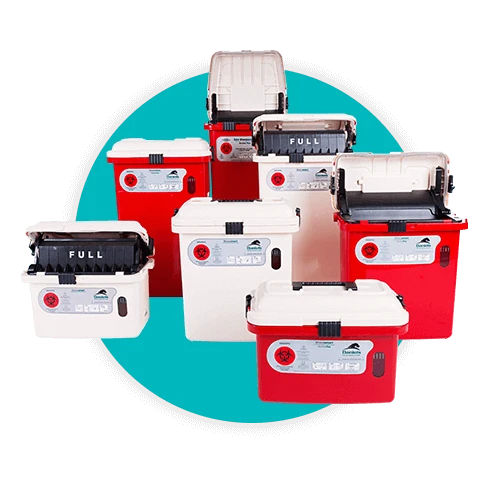 How Do Veterinary Practices Dispose of Medical Waste?
Veterinary practices dispose of medical waste by separating it at the point of creation into sharps, pathological waste, pharmaceutical and controlled-substance waste, and biohazardous waste, then sending each stream through a licensed treatment pathway.
One routine spay shows how quickly the streams pile up. It leaves behind a scalpel blade, blood-soaked gauze, excised tissue, and a partial vial of a Schedule III anesthetic, and each of those leaves the building by a different route.
Daniels Health services veterinary clinics, animal hospitals, and specialty practices across the United States with reusable containers sized to each room and a pickup schedule set by what your practice generates. Every collection is handled directly by Daniels’ drivers and trucks, so the chain of custody runs from your treatment area to final destruction. Our commitment to veterinary practices is:
- Transparent pricing with no surprise fees
- Pickup frequency matched to your waste volume
- Containment that leads on safety, sustainability, and compliance
- Cradle-to-grave tracking from pickup through destruction
-
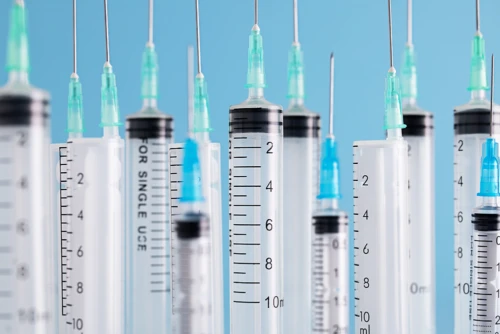
Sharps from Exams, Surgery, and Vaccinations
Needles, syringes, scalpel and suture blades, IV catheters, microchip implanter needles, and broken glass from vaccine vials all count as sharps. Vaccine clinics and practices treating diabetic pets fill their sharps containers fastest.
-
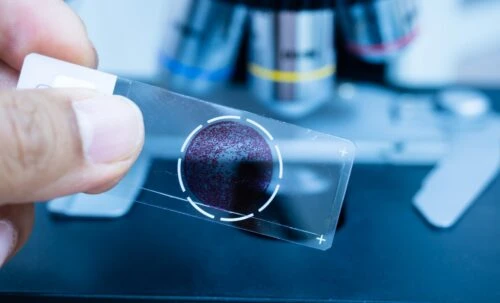
Pathological Waste and Animal Remains
Pathological waste, such as tissue from spays, neuters, and mass removals, amputated limbs, necropsy specimens, and remains not released for private cremation, needs its own container. Most states send it to incineration, not an autoclave.
-
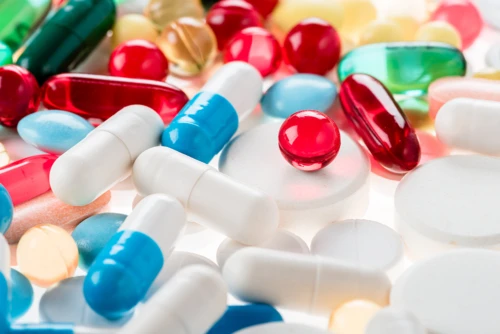
Pharmaceutical and Controlled Substance Waste
Expired antibiotics, vaccines, partial vials, and compounded medications belong in a pharmaceutical container. Euthanasia solutions, ketamine, butorphanol, and other scheduled drugs need DEA-compliant destruction.
-
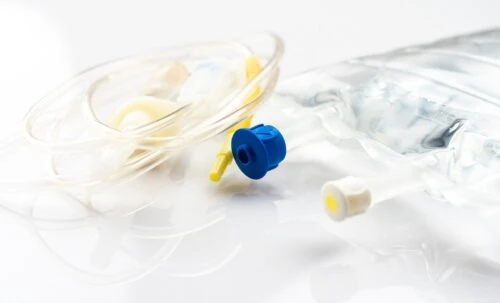
Chemotherapy Waste
Trace chemo waste from veterinary oncology, like empty vials, IV sets, gloves, and gowns, goes to incineration. Unused drugs, partial vials, and spill cleanup count as bulk chemo, usually managed as hazardous waste.
-
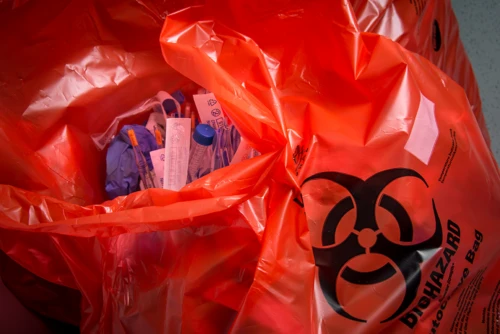
Biohazardous and Biomedical Waste
Blood-saturated gauze and drapes, fluid-filled IV lines, in-house lab cultures, and bedding from animals with a suspected zoonotic infection are regulated medical waste. Gloves and routine bedding with no visible blood usually go to general trash.
Safe, Ecological and Cost-minimizing solutions for veterinary practices
-
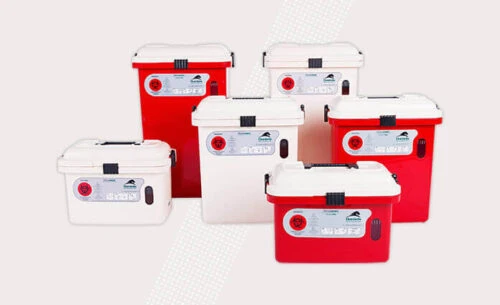
Sharps Disposal: Needles & Syringes
Daniels has the safest sharp waste disposal containers in the world. They are proven to reduce needlestick injuries by upwards of 87%. Our…
-
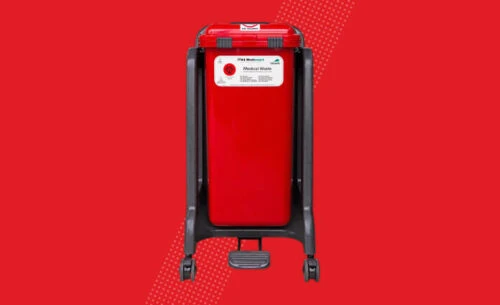
RMW: Regulated Medical Waste Disposal Services
Daniels Regulated Medical Waste (RMW) product and service solutions put safety and infection control at the forefront of medical waste…
-

Pathological Waste Disposal Services
Minimize costs and keep your healthcare workers safe with our secure and reliable pathological and anatomical waste disposal services.
-
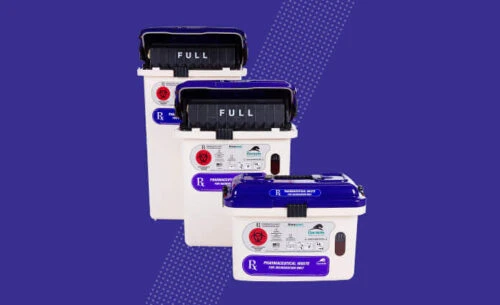
Pharmaceutical Waste Disposal Services
Daniels Pharmaceutical collection systems and services are designed first and foremost to protect and eliminate theft or misappropriation of…
-
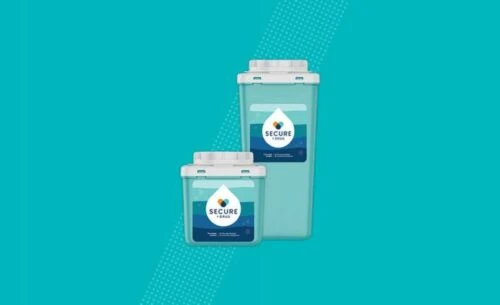
Controlled Substance Disposal
Secure, multi-use product for drug deactivation, preventing diversion risk and downstream environmental impact of medication pollution.
-
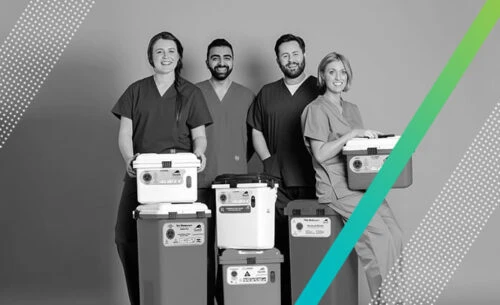
Medical Waste Optimization Services
Through waste optimization programs, we partner to achieve the highest results attainable in segregation, landfill diversion, and…
-

Compliance
Experts in Compliance, Daniels provides simple online training that guarantees your staff are safe, and your practice is compliant.
-

Education
Daniels Health provides expertise within your facility to train staff, provide e-learning courses and educational resources, and empower…








Safety-Designed Medical Waste Systems
When a cardboard box for medical waste just won’t cut it in a beautiful patient environment!
When we sought out to change the way medical waste was managed in the United States, we started with ‘would we place a cardboard box full of waste in our home environment’. The answer was no, so why would this be acceptable for a patient room? Across all 50 states, Daniels provides the safest, most secure, and most clinically advanced sharps, pharmaceutical and medical waste containers for healthcare facilities, combatting issues commonly associated with medical waste disposal including medications theft, leaking, needlestick injuries, and cross contamination.
Sharpsmart. World Leading Sharps Safety Technology
Peer reviewed in four independent studies, clinically proven to reduce needlestick Injuries by up to 87%, and relied on by healthcare facilities around the world, the Sharpsmart system is driven by a single objective – To Save Lives. Designed with 13 safety features, manufactured with needle-impenetrable plastic, a gravity balanced safety tray for risk-free sharps disposal, and a built-in overfill protection mechanism, the Daniels Sharpsmart is the most advanced sharps container system in the world.
Medismart, the future of medical waste management
Infection minimizing innovation for the collection of Regulated Medical Waste
The Daniels Medismart is the first regulated medical waste system to truly modernize RMW waste management. Reducing time and labor, preventing infection transfer, eliminating multi-handling of waste, preventing sharps injuries, and dramatically improving waste segregation, the Medismart ushers in a new era of safe point-of-use and cost-effective medical waste disposal.
Is the “Daniels Difference” just a clever marketing phrase?
“Different” is often subjective – a different perspective, a different approach, a different focus, vision, or personal preference. For us at Daniels Health, DIFFERENCE embodies all these things, but it also delivers a very different result. Reduction in needlestick injuries, reduction in waste volumes, reduction in costs, reduction in labor, increase in efficiencies, compliance, and trust. We don’t promise a different methodology, we promise transformation of your current practices.
An online portal that manages all your compliance needs
Helping healthcare facilities nationally to mitigate fines and damages for OSHA non-compliance, Daniels offers simple online education via an easy-to-use customer portal. Combining up-to-date training modules for Bloodborne Pathogens, HAZCOM, HIPAA, DOT and hand hygiene, library access to millions of MSDS and federal regulations updated weekly, online training records and certificates, and unlimited safety audits and waste plans, our online compliance portal is adaptable to varying staff needs in the non-acute sector.
“Daniels delivers the best service…”
We switched to Daniels from Stericycle last year. The quality of service is better than previous suppliers, and the containers are safer for the staff to use. It’s nice to have a rep that we can communicate with and get timely help from; a lot of companies don’t have reps that will come on-site and work through issues. As far as we’ve seen in the industry, Daniels is the best service at the most affordable price.
Jennifer Chura, Purchasing / CPD Supervisor
Midtown Surgery Center

“Partnership in Sustainability…”
Here at Centegra, we are all about our future footprint concerning our environmental waste, this is where Daniels Health and Centegra become a very good match. Centegra’s working relationship with Daniels has been very professional throughout the years. One of the outstanding points that comes to mind is the reliability that Daniels has proven time and time again.
Tammie Johnson
Cumberland Medical Center, Crossville, Tennessee

“Daniels is just wonderful!…”
We are a free clinic with no means of support except for grants and donations, and therefore, we depend on fairly priced services for the clinic. Daniels is just wonderful! The key points are dependability, professionalism, and affordable pricing. The driver does a great job, is personable, and is helpful, and the entire program is really low maintenance. I am happy to recommend Daniels because of all they provide for us.
Paul Tyrer (Office Manager)
SE In. Health

“Why I Rely on Daniels…”
Daniels drivers are extremely courteous, and it is obvious they are trained and knowledgeable in their field. All Daniels Health representatives that we have had the pleasure of working with are knowledgeable and have been of great help to us.
Mackenzie Friend HT (ASCP), Safety Officer
Mid America Pathology Laboratory

“Fewer Interruptions…”
With Daniels’ larger containers, we have fewer pick-ups, which means fewer interruptions for our support staff in the ORs. With hazardous waste, it’s important to have a provider that’s compliant with DOH policies. Daniels demonstrates this through their safe containers and staff education initiatives (BBP training, in-services, OSHA guidance, etc). Daniels is the best service at the most affordable price.
Jennifer Chura, Purchashing / CPD Supervisor
Midtown Surgery Center

Veterinary Waste Management Resources
For the regulatory details behind this page, including how veterinary waste guidelines vary by state, read our Compliant Medical Waste Guide for Veterinary Clinics.
To get compliance updates and new guides by email, set your newsletter preferences.
Let’s Talk!
Your time is valuable, and we don’t want to play hard to get it. You can either phone us directly on the details listed on our contact page, or feel free to fill out this short form, and one of our team members will get back to you as quickly as possible.