Dental Waste Solutions made simple
Flexible and cost-effective dental waste management – collection, disposal, and treatment solutions – that will leave you “flossed” for words.
Dental Waste Simplified
Daniels Health offers waste pickup services for a variety of waste streams including:
- Biohazardous Sharps
- Regulated Medical Waste
- Pharmaceutical Waste
- Dental Amalgam
Continue reading, or click below to learn:
- How Do Dental Practices Safely Manage Medical Waste?
- What Types of Waste Do Dental Practices Generate?
- How Should Dental Practices Handle Sharps Disposal?
- How Can Dental Practices Reduce Waste and Waste Costs?
- Why Do Dental Practices Choose Daniels Health
- How Do Dental Practices Dispose of Amalgam Waste?
- What Does Dental Waste Compliance Actually Require?
- Frequently Asked Questions About Dental Waste Disposal
Dental Waste Disposal Services
How Do Dental Practices Safely Manage Medical Waste?
Dental waste disposal means managing four separate streams: sharps waste (needles, burs, endodontic files, anesthetic carpules), amalgam waste governed by the EPA’s dental amalgam rule, chemical and pharmaceutical waste (x-ray fixer, lead, expired medications), and regulated medical waste like blood-saturated gauze.
A two-chair practice answers to OSHA, the EPA, and a state dental board using the same eight feet of counter space where patients get seated. Each waste stream takes a different container and a different disposal pathway, and none of them can share a bin.
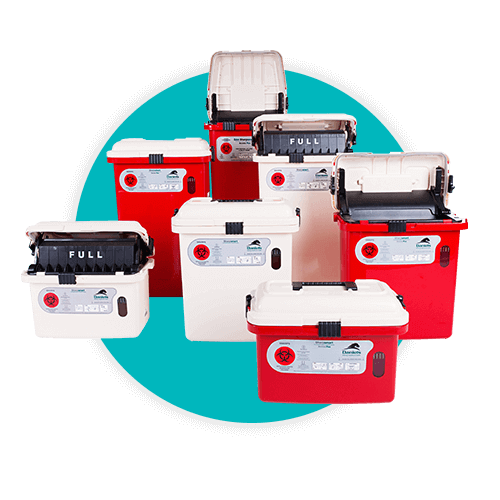
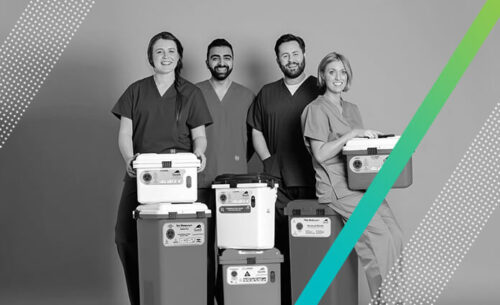
Daniels Health offers personalized medical waste disposal and medical waste containers to cater to every size of dental facility across the United States. Our wall-mounted and bench-mounted sharps containers sit at point of use rather than eating counter space, and service frequency is set to what your practice actually generates.

Safe, Ecological and Cost-minimizing solutions for dental practices
-
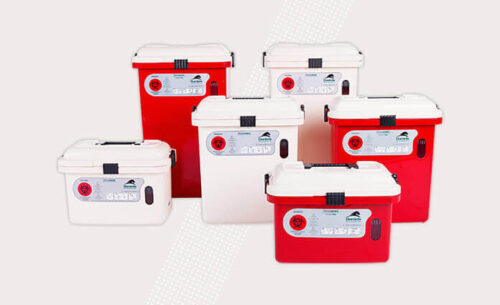
Sharps Disposal: Needles & Syringes
Daniels has the safest sharps waste disposal containers in the world. They are proven to reduce needlestick injuries by upwards of 87%. Our…
-
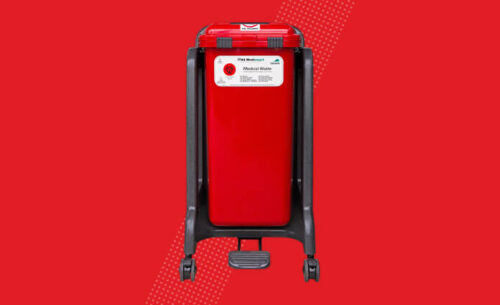
RMW: Regulated Medical Waste Disposal Services
Daniels Regulated Medical Waste (RMW) product and service solutions put safety and infection control at the forefront of medical waste…
-
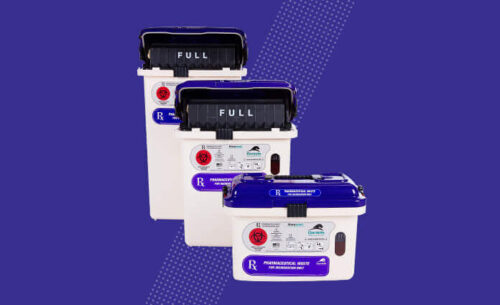
Pharmaceutical Waste Disposal Services
Daniels Pharmaceutical collection systems and services are designed first and foremost to protect, and eliminate theft or misappropriation of…
-
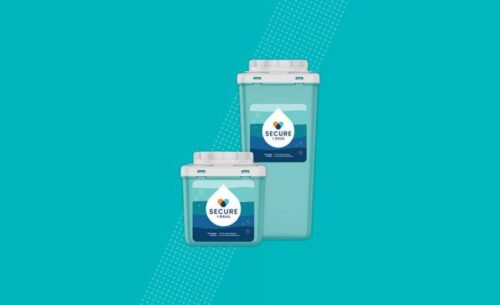
Controlled Substance Disposal
Secure, multi-use product for drug deactivation, preventing diversion risk and downstream environmental impact of medication pollution.
-
Medical Waste Optimization Services
Through waste optimization programs, we partner to achieve the highest results attainable in segregation, landfill diversion, and…
-

Compliance
Experts in Compliance, Daniels provides simple online training that guarantees your staff are safe, and your practice is compliant.
-

Education
Daniels Health provides expertise within your facility to train staff, provide e-learning courses and educational resources, and empower…






How Do Dental Practices Dispose of Amalgam Waste?
Dental amalgam disposal runs through a licensed recycler or treatment handler. Non-contact scrap, contact amalgam, chairside trap and screen contents, vacuum pump filter contents, separator canisters, and extracted teeth with amalgam restorations all go there, never into red bags, sharps containers, or the drain.
Under EPA 40 CFR Part 441, practices that place or remove amalgam must operate an amalgam separator removing at least 95% of solids from wastewater, and must follow two best management practices: no discharging scrap amalgam to a drain, and no cleaning chairside traps, vacuum lines, or dental unit water lines with oxidizing or acidic cleaners (including bleach, chlorine, iodine, and peroxide) that have a pH below 6 or above 8. Those cleaners can dissolve the mercury bound in amalgam and send it downstream.
Part 441 sits under the Clean Water Act as a pretreatment standard, so it governs what leaves your building through the sewer. The solid amalgam your separator captures is a separate obligation, handled as mercury-containing waste through a recycler. More detail in our amalgam regulations resources.


Sharpsmart. World Leading Sharps Safety Technology
Peer reviewed in four independent studies, clinically proven to reduce needlestick Injuries by up to 87%, and relied on by healthcare facilities around the world, the Sharpsmart system is driven by a single objective – To Save Lives. Designed with 13 safety features, manufactured with needle-impenetrable plastic, a gravity balanced safety tray for risk-free sharps disposal, and a built-in overfill protection mechanism, the Daniels Sharpsmart is the most advanced sharps container system in the world.
Medismart, the future of medical waste management
Infection minimizing innovation for the collection of Regulated Medical Waste
The Daniels Medismart is the first regulated medical waste system to truly modernize RMW waste management. Reducing time and labor, preventing infection transfer, eliminating multi-handling of waste, preventing sharps injuries, and dramatically improving waste segregation, the Medismart ushers in a new era of safe point-of-use and cost-effective medical waste disposal.
An online portal that manages all your compliance needs
Helping healthcare facilities nationally to mitigate fines and damages for OSHA non-compliance, Daniels offers simple online education via an easy-to-use customer portal. Combining up-to-date training modules for Bloodborne Pathogens, HAZCOM, HIPAA, DOT and hand hygiene, library access to millions of MSDS and federal regulations updated weekly, online training records and certificates, and unlimited safety audits and waste plans, our online compliance portal is adaptable to varying staff needs in the non-acute sector.
Is the “Daniels Difference” just a clever marketing phrase?
“Different” is often subjective – a different perspective, a different approach, a different focus, vision, or personal preference. For us at Daniels Health, DIFFERENCE embodies all these things, but it also delivers a very different result. Reduction in needlestick injuries, reduction in waste volumes, reduction in costs, reduction in labor, increase in efficiencies, compliance, and trust. We don’t promise a different methodology; we promise transformation of your current practices.
GPO Partnerships across the United States
We have a lot of friends…
Daniels has the largest number of Group Purchasing Organization affiliations of any medical waste company in the United States. With partnerships spanning many years including a long-standing relationship with Premier and its affiliates, Daniels is the supplier of choice for practices across every clinical sector including general practice, surgical, oncology, dental, and long-term care. Find out if we’re connected to your GPO.



“Daniels delivers the best service…”
We switched to Daniels from Stericycle last year. The quality of service is better than previous suppliers, and the containers are safer for the staff to use. It’s nice to have a rep that we can communicate with and get timely help from; a lot of companies don’t have reps that will come on-site and work through issues. As far as we’ve seen in the industry, Daniels is the best service at the most affordable price.
Jennifer Chura, Purchasing / CPD Supervisor
Midtown Surgery Center

“Partnership in Sustainability…”
Here at Centegra, we are all about our future footprint concerning our environmental waste, this is where Daniels Health and Centegra become a very good match. Centegra’s working relationship with Daniels has been very professional throughout the years. One of the outstanding points that comes to mind is the reliability that Daniels has proven time and time again.
Tammie Johnson
Cumberland Medical Center, Crossville, Tennessee

“Daniels is just wonderful!…”
We are a free clinic with no means of support except for grants and donations, and therefore, we depend on fairly priced services for the clinic. Daniels is just wonderful! The key points are dependability, professionalism, and affordable pricing. The driver does a great job, is personable, and is helpful, and the entire program is really low maintenance. I am happy to recommend Daniels because of all they provide for us.
Paul Tyrer (Office Manager)
SE In. Health

“Why I Rely on Daniels…”
Daniels drivers are extremely courteous, and it is obvious they are trained and knowledgeable in their field. All Daniels Health representatives that we have had the pleasure of working with are knowledgeable and have been of great help to us.
Mackenzie Friend HT (ASCP), Safety Officer
Mid America Pathology Laboratory

“Fewer Interruptions…”
With Daniels’ larger containers, we have fewer pick-ups, which means fewer interruptions for our support staff in the ORs. With hazardous waste, it’s important to have a provider that’s compliant with DOH policies. Daniels demonstrates this through their safe containers and staff education initiatives (BBP training, in-services, OSHA guidance, etc). Daniels is the best service at the most affordable price.
Jennifer Chura, Purchashing / CPD Supervisor
Midtown Surgery Center

Dental Waste Management Resources
Guides and training built for practices handling compliance without a dedicated safety officer, including amalgam regulation updates.
Let’s Talk!
Your time is valuable, and we don’t want to play hard to get it. You can either phone us directly on the details listed on our contact page, or feel free to fill out this short form, and one of our team members will get back to you as quickly as possible.