Waste Management for Academic Medical Centers: Supporting the Work That Shapes the Future of Healthcare
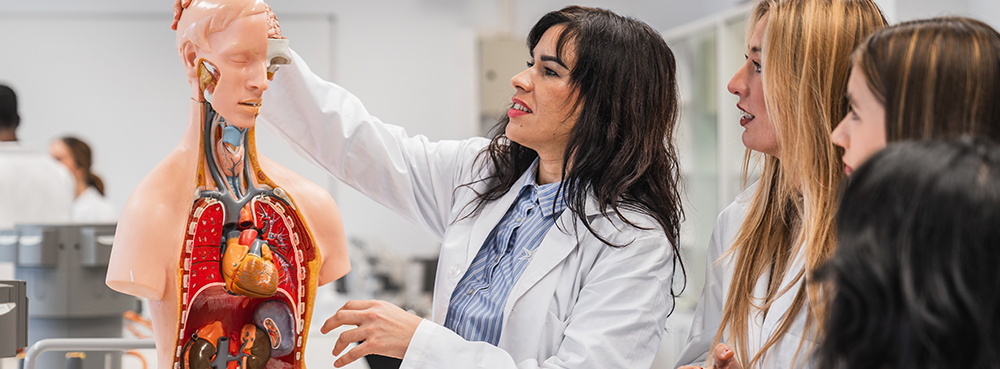
Academic Medical Centers (AMCs) push healthcare forward every day, training future healthcare providers and advancing medicine, all while delivering life-changing patient care. Across a single institution, surgical units, outpatient clinics, and research labs all operate differently, each with its own pace, risks, and waste demands.
In academic medicine, waste operations reach far beyond disposal. They help protect staff, support compliance day to day, keep departments running consistently, and help institutions keep pace with changing needs. For organizations built on innovation and advancement, that raises an important question: should their waste strategy be as forward-looking as the work happening inside their walls?
In AMCs, that means looking beyond waste removal alone. These environments need systems that make day-to-day work safer; support the distinct demands of clinical, research, and academic spaces; and help teams stay focused on the work that matters most.
That is why the right partner matters. Academic Medical Centers and Daniels Health share a common purpose: advancing care while making healthcare safer. When waste management is built with that same spirit of innovation, it provides the safety and support needed behind the scenes so institutions can stay focused on teaching, research, and patient care.
TOPICS WE WILL COVER:
- Where Traditional Waste Programs Begin to Break Down
- Who Pays the Price When the System Fails?
- Case Study: Stanford School of Medicine
- Case Study: UVA Health
- Built for the Demands of Academic Medicine

Where Traditional Waste Programs Begin to Break Down
Academic Medical Centers are built around variation. Across an AMC, operating rooms, ICUs, clinics, and research labs generate different waste streams at different volumes and with different handling requirements. Research shows that this kind of variation is heavily pronounced in more complex hospital environments.
The challenge is not just volume but the number of decisions happening at the point of generation, where the EPA identifies medical waste risk as highest. In an AMC, those decisions happen constantly across clinical, research, and teaching spaces.
That is where traditional models begin to break down. Rigid service offerings that don’t evolve to meet the needs of the system often struggle to keep pace, especially when waste programs are divided across vendors or facilities.
Who Pays the Price When the System Fails?
In an Academic Medical Center, it is never just the system. It is the nurse moving quickly from one patient to the next. The environmental services worker handling full containers at the end of a long shift. The researcher focused on work that could change lives, but still depends on every safety measure around them holding up the way it should.
The right waste partner should make their jobs safer, not harder. It should help prevent sharps injuries before they happen. It should make safe disposal possible in the moment, not after the risk has already traveled downstream. It should support sustainability in a way that respects the pace of the people doing the work. And it should give teams a clearer picture of what is happening across departments, so problems can be addressed before they become someone else’s burden.
That is why universities choose Daniels Health.
For institutions like Stanford and UVA, the value was never just in having waste removed. It was in building a safer system behind the scenes, one that better protects the people at the center of healthcare.
Case Study: Stanford School of Medicine
Improving Efficiency Across a Multi-Building Environment
Stanford School of Medicine faced a set of challenges that are common within large academic institutions. Medical waste and sharps disposal were managed across 26 buildings by multiple vendors, resulting in inconsistent service experiences, confusion around proper waste segregation, and recurring concerns about containers reaching capacity too quickly in lab settings.
Rather than addressing these issues individually, our team approached the situation by evaluating the system holistically.
Through a thorough assessment of waste flow across all facilities, combined with targeted waste audits, our team developed a clearer understanding of how waste was being generated and managed at the building and department level. This informed the design of a more coordinated program, including standardized training to improve segregation practices and a consolidated service model to eliminate fragmentation.
Upon implementing our waste system and assuming full responsibility across all streams, Stanford was able to transition to a more cohesive and efficient system.
The results included:
- A 20% increase in efficiency within the first year
- A reduction in service related complaints
- Greater consistency across departments and facilities
Case Study: UVA Health
Executing an Efficient Transition Under Time-Sensitive Conditions
UVA Health, a 700-plus-bed acute care facility, encountered a detrimental disruption when their existing supplier was no longer able to provide sharps containers after a catastrophic fire had broken out. In response, UVA initiated an accelerated process to identify a vendor capable of delivering both speed and reliability under constrained timelines.
Our team was able to conduct a site assessment within one week, working closely with clinical and operational stakeholders to develop an installation plan that minimized disruption to patient care. While alternative proposals projected timelines of eight to ten weeks, Daniels committed to completing the transition within just three.
Following implementation:
- Staff reported improved safety and usability
- The system was perceived as cleaner and more efficient
- Greater flexibility allowed departments to better manage changing waste volumes
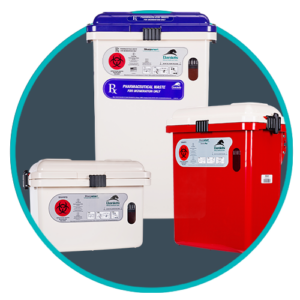
Built for the Demands of Academic Medicine
Academic Medical Centers are constantly evolving, and the systems behind them need to evolve with them.
Waste management may be treated as a support function, but in academic medicine, it touches far more than disposal in affecting safety, compliance, and the ability of departments across the organization to operate with confidence.
A stronger approach brings control where it is often lost: at the point of use, across facilities, and between departments that do not always operate the same way. It creates greater consistency in how waste is handled, better visibility into where service needs are shifting, and a model that can support the day-to-day realities of academic medicine without falling out of step.
Daniels Health supports Academic Medical Centers with waste programs built to do exactly that.

Salena Yasin
Let's Talk!
Your time is valuable, and we don’t want to play hard to get. You can either phone us directly on the details listed on our contact page, or feel free to fill out this short form and one of our team members will get back to you as quickly as possible.