How to Prepare Healthcare Waste Operations for Severe Weather

A flood warning goes out overnight. By morning, two main roads into the hospital are closed and the emergency department is getting busier. Nurses and physicians are doing what they always do, keeping patient care moving.
Outside the hospital walls, normal operations change quickly. Roads close. Deliveries are delayed. Employees face difficult commutes. Scheduled waste pickups are disrupted.
Through all of it, your facility keeps generating waste.
As fall brings another season of severe weather, now is a good time to ask whether your waste operations are ready for disruption.
TOPICS WE WILL COVER:
- What Happens to Hospital Waste During a Natural Disaster?
- What Should a Healthcare Waste Contingency Plan Include?
- How Do Healthcare Waste Partners Prepare for Severe Weather?
- Daniels Health Keeps You Storm Ready
What Happens to Hospital Waste During a Natural Disaster?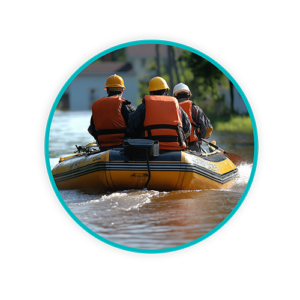
During a natural disaster, hospitals keep generating waste while road closures, power outages and staffing gaps disrupt scheduled waste pickups.
Waste volumes usually drop because hospitals postpone non-urgent procedures, but the waste never stops completely. When pickups are delayed, waste can build up quickly, filling containers and storage areas and creating unsafe conditions for staff and patients.
So, what happens if your scheduled pickup is two days late? Where does the waste go? Who do you call?
What Should a Healthcare Waste Contingency Plan Include?
A healthcare waste contingency plan outlines how your facility will store, contain and manage waste if scheduled service is delayed. Planning ahead gives your team a clear process for keeping waste operations safe when conditions change unexpectedly.
Hospitals that participate in Medicare and Medicaid are already required to maintain an emergency preparedness program under the CMS Emergency Preparedness Rule, and waste planning fits naturally within that preparation.
A few questions to work through with your team and waste partner:
- How much waste do you typically generate each day, by waste stream?
- How much storage space do you have, and how long could you safely hold waste if service is delayed?
- Do you have extra containers and supplies on-site, and where are they kept?
- Who is the escalation contact on each side, and how will you communicate if local phone or email service goes down?
Knowing those answers helps prevent containers and storage areas from reaching capacity while allowing clinical teams to stay focused on patients
How Do Healthcare Waste Partners Prepare for Severe Weather?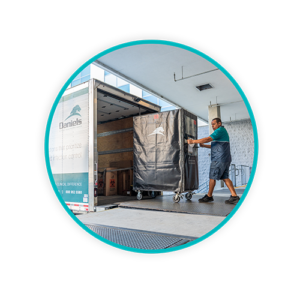
Healthcare waste partners prepare for severe weather with local contingency plans, coordinated response teams and equipment positioned ahead of disruptions.
As part of its commitment to the Department of Health and Human Services Health Sector Climate Pledge, Daniels Health developed its Climate Resilience Plan for Continuous Operations to maintain service continuity during climate-related disasters.
Every Daniels facility has an Operations Manual, Emergency Action Plan and Contingency Plan, with contingency plans tailored to local risks, from hurricanes along the Gulf Coast to tornadoes and flooding in the Midwest. Daniels facilities are also located outside FEMA-designated 100-year flood plains.
When severe weather is approaching:
- An action team forms. Team members outside the impacted area lead the response so local outages do not cut off communication.
- At-risk customers are contacted early. Outreach begins with sites that require service more than once a week.
- Trucks and capacity are positioned nearby. Trucks with empty containers are staged in safe areas, while neighboring plants and transfer stations offset disruptions.
- Supplies are already in place. Spare containers and supplies are kept at customer sites, backed by more than 12 months of supply across facilities.
After conditions are safe, normal operations resume. The team will review the response and adjusts plans based on lessons learned.
Daniels Health Keeps You Storm Ready
Severe weather creates uncertainty. A strong contingency plan keeps healthcare waste from becoming another disruption.
For Daniels, that means preparing before the storm arrives so healthcare teams can stay focused on patient care.

Erika Safrin
Let's Talk!
Your time is valuable, and we don’t want to play hard to get. You can either phone us directly on the details listed on our contact page, or feel free to fill out this short form and one of our team members will get back to you as quickly as possible.