The Goldilocks Guide to Medical Waste Bins
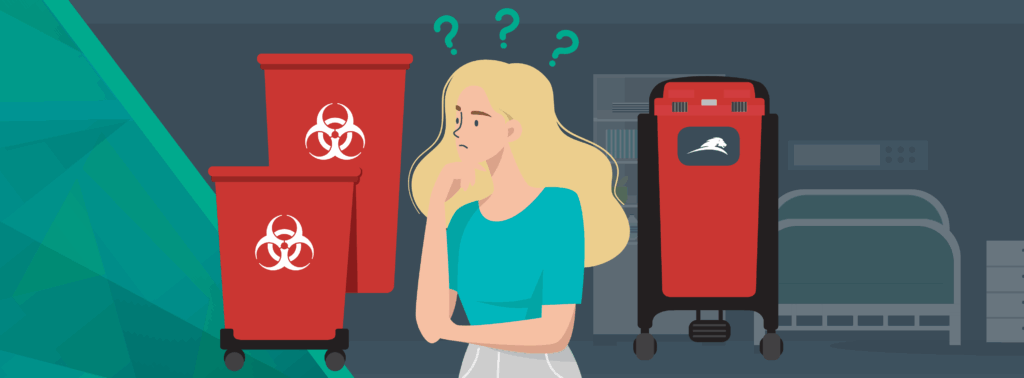
When it comes to managing regulated medical waste, one size doesn’t fit all. Just like the classic Goldilocks story: not too hot, not too cold, but just right.
At Daniels, we believe that the “just right” fit is the only way to go for your regulated medical waste bins. Every facility and department has its own unique needs and challenges, and we’re here to help you find the perfect solution.
Right-sizing is an important step for all healthcare waste streams, but today we’re focusing specifically on regulated medical waste (RMW) disposal.
Using bins that are too big or too small can lead to a variety of problems, from overflowing medical waste to wasted space and unnecessary costs. And with complex regulatory requirements that vary by waste type, ensuring the right bin size supports a compliant waste program.
Use this Goldilocks guide to make sure your RMW bins are suited to the right environment.
IN THIS GUIDE:
- When Your RMW Bins Are Way Too Big
- When Your RMW Bins Are Just Too Small
- Daniels Ensures Your RMW Bins Are “Just Right”
- When Your Bins Are “Just Right”
When Your RMW Bins Are Way Too Big
While it might seem like a good idea to have a large RMW bin, it can lead to several constraints and issues.
Wasted Space
While it may seem logical to opt for larger bins as they can hold more volume, this can present space limitations in tight corridors or soiled utility rooms. Hospitals that choose to have an oversized accumulation bin in a central storage area also commonly adopt the process of decanting (i.e. that waste is moved from the large stationery bin into smaller bins for transport), creating further space requirements for additional waste movement and containment, and multiplying waste handling risks.
Safety Risks
Even if space is not an issue, there are still safety risks associated with overly large medical waste bins, particularly if they do not have inbuilt wheels for seamless movement. Lifting a weighted bin with a top handle can cause rotator cuff injury, and if proper lifting procedures are not observed, even lifting a heavy bin from both sides can cause back injury.
Extended storage of medical waste, or the re-use of a bin that does not undergo proper cleaning and decontamination procedures, provides a perfect environment for bacteria and other pathogens to grow. This creates a direct risk to both healthcare staff and patients through potential exposure to contaminated surfaces.
Compliance and Regulatory Fines
The Centers for Disease Control and Prevention (CDC) instructs healthcare facilities to dispose of medical waste regularly to prevent accumulation. While specific regulations on storage duration can vary by state, the general rule of thumb established by the EPA is that larger waste generators have shorter on-site accumulation time limits.
For acute care facilities that generate significant volumes of waste, this means bins must be exchanged more frequently, regardless of the total available capacity of the bin. Simply installing a larger bin doesn’t automatically reduce your exchange frequency.
Failing to comply to your state’s storage regulations can result in substantial fines and other consequences.
When Your RMW Bins Are Just Too Small
If a medical waste bin is too small, it creates just as many problems as one that is too large, affecting staff, patients and the hospital budget.
A Misuse of Staff Efficiency
It’s a simple truth: smaller RMW bins need to be processed more frequently. For a busy hospital, this is a significant drain on resources. Every time an environmental services professional handles a small bin, it pulls them away from essential tasks such as disinfecting patient rooms and preparing operating rooms.
This constant back-and-forth is not only inefficient but also introduces potential infection and safety hazards.
It also significantly increases labor costs, which is one of the largest factors in a hospital’s budget.
- More Bins; More Processing: When RMW bins fill-up, EVS professionals need to replace their red-bag liners (unless your hospital system uses Medismart, of course). If bins are too small, this processing frequency becomes overly burdensome, distracting from other necessary duties or potentially requiring excess staff to accomplish it.
- More Bins; More Transportation Costs: Transporting waste to a disposal facility is a cost variable not discussed enough. A higher number of medical waste bin collections can lead to unnecessary transportation costs, making the waste disposal process less cost-effective and environmentally friendly.
 Patient Interruptions
Small bins don’t just affect staff. They also disrupt patients. When medical waste bins or red-bag liners are exchanged overly frequently, that means EVS staff must enter rooms more often, causing unnecessary interruptions for patients. No matter the type of facility, these interruptions cause frustration and can damage the relationship between patients and staff.
How do we know this?
Patient satisfaction is directly measured by surveys like the Hospital Consumer Assessment of Healthcare Providers and Systems (HCAHPS). Patients who express displeasure about the number of interruptions during their stay can directly impact a facility’s HCAHPS score. These scores impact a hospital’s funding and reputation.
In other words, constant waste-related interruptions can impact what matters most in a hospital: patient care.
The Problems with Full Bins
In healthcare, every second matters. If a nurse is performing a procedure and the nearest bin is already full, what do they do?
Maybe they are forced to stop what should be a simple task and search for another receptacle. This is more than an inconvenience. It is a potential safety risk and compliance violation.
The time spent searching for an empty bin pulls a healthcare provider away from their primary duty, patient care. These small delays can have a significant impact on workflow and patient outcomes. It also creates unnecessary infection risks because waste should always be disposed of as near to the point of generation as possible.
Daniels Ensures Your RMW Bins Are “Just Right”
Here at Daniels Health, we believe the answer lies in data and expertise. Just like every other healthcare facility, your waste program is unique. There’s no cookie-cutter solution that fits every hospital, which is why we shine in having a fluid and nimble approach that delivers site-relevant solutions rather than off-the-shelf packages.
Facility Audits
When you partner with Daniels, our experts begin with an extensive pre-planning phase that includes performing specialized department audits.
- Our expert field service team walks through your facility, conducting a detailed site audit to blueprint specific requirements location by location.
- This assessment considers unique staffing, waste volume and space constraints to ensure bin sizes, positioning, and waste education solutions are perfectly tailored to your needs.
This approach allows us to determine the optimal bin size and type required for each location within the four walls of your facility. By identifying the specific needs of each department, we ensure your clinical and EVS staff are never left with regulated medical waste bins that are too small, or too big.
We Let Your Data go to Waste
 To ensure we are “just right,” we take your data very seriously. Our reporting capabilities provide transparency into what’s working and what’s not, by tracking key metrics:
- Bin weights and fill levels (pounds per exchange)
- Bin exchange frequency by waste type
- Billing/spending per category with trend data
- Waste volume benchmarks at the department or facility level
We track your performance against nationally benchmarked results and utilize our expertise to provide recommendations that reduce costs and meet your clinical, environmental and financial objectives. This customized blueprinting approach allows you to rely on actionable data to make sure you have the “just right” bin.
Daniels Experts Support You
Our partnership extends far beyond providing right sized medical waste bins. Our clinical, education and compliance experts work with frontline clinical and EVS teams to understand and optimize every process pertaining to medical waste collection, segregation and movement within your facility.
Our dedicated Account and Field Service Managers provide regular in-servicing to both clinical and operational staff, ensuring a high level of understanding and comfort with waste segregation, safe container use, and waste movement.
Our field staff, dedicated account managers, program managers and clinical education experts work closely with each hospital department to map solutions that will drive optimal efficiency, identifying training needs and facilitating further education during the first month following implementation.
When Your Medical Waste Bins Are “Just Right”
Just like the little bear’s chair and the little bear’s bed, your medical waste bins must be just right for your facility’s unique workflow. The dangers of a too-big or too-small medical waste bin are obvious: increased costs, wasted staff time, patient disruption and serious safety and infection control risks.
By partnering with Daniels Health, you gain a proven, data-backed system designed to be efficient, compliant and, most importantly, safe.
Are you ready to stop settling for too much or too little and find the waste management solution that is just right for your hospital?

Erika Safrin
Let's Talk!
Your time is valuable, and we don’t want to play hard to get. You can either phone us directly on the details listed on our contact page, or feel free to fill out this short form and one of our team members will get back to you as quickly as possible.